Posts in Tech Info

Category: Tech Info

This category is about helping understand different things that can help prolong the life of aircraft.

  • King Air Owners: Protect Your Windshields – They May Be Harder to Replace Than You Think

    King Air Owners: Protect Your Windshields – They May Be Harder to Replace Than You Think

    While going through some old photos, I came across several from a King Air windshield replacement we completed and thought they were worth sharing.

    Most King Air owners already know that replacing a windshield has never been inexpensive. Unfortunately, today’s supply chain has made the situation much worse.
    We recently ordered a set of replacement windshields for one of our customers. When I asked the manufacturer for an estimated delivery time, they honestly couldn’t give me one. I even asked if we were looking at more than a year, and their response was essentially, “Probably… but we can’t promise that because some are taking even longer.”

    That should get every King Air owner’s attention.

    Across the country there are aircraft sitting in hangars with plywood or temporary covers where their windshields once were, waiting on replacement glass. What used to be a scheduled maintenance event can now turn into an extended Aircraft on Ground (AOG) situation.

    During my search for available windshields, I did locate one source that reportedly had them available immediately. The asking price was approximately $60,000 per windshield.

    For comparison, purchasing through the normal supply chain is currently just under $20,000 per side, although those orders may now involve lead times exceeding a year. That $60,000 price isn’t representative of the normal market—it simply reflects the premium someone is willing to pay when immediate availability is the only option.

    Because of this, taking care of the windshields, you already have has never been more important.

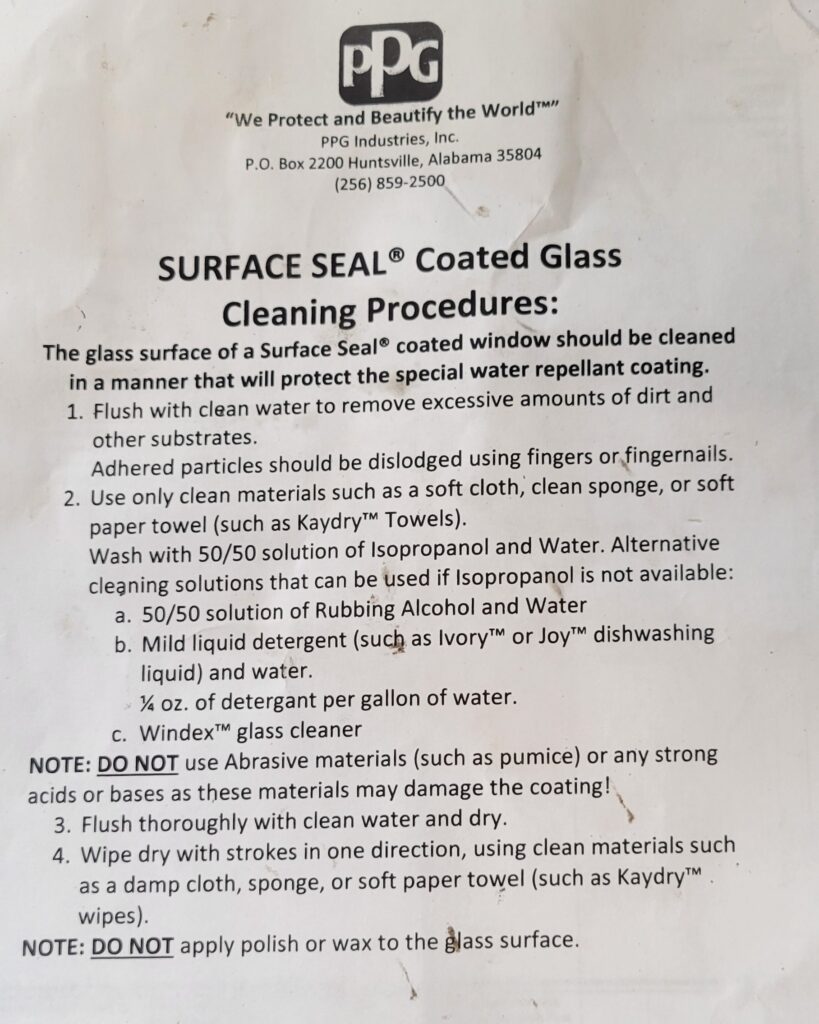
    One of the photos I’m including is the manufacturer-provided care sheet that came with a windshield we recently installed. These are the cleaning recommendations supplied by the manufacturer.

    PPG Surface Seal® Coated Windshield Cleaning Recommendations

    Before Cleaning

    • Rinse the windshield thoroughly with clean water to remove loose dirt and debris.
    • If bugs or other material remain stuck to the windshield, gently remove them using only your fingers or fingernails. Avoid using scrapers or abrasive tools.

    Use Only Clean, Soft Materials Such As

    • Soft microfiber cloths
    • Clean sponges
    • Soft paper towels

    Recommended Cleaning Solutions

    • 50/50 mixture of isopropyl alcohol and water
    • 50/50 mixture of rubbing alcohol and water
    • Mild liquid dishwashing detergent (approximately ¼ ounce per gallon of water)
    • Windex® Glass Cleaner
    King Air Windshield Cleaning Care
    King Air Windshields are costly to replace and the lead time for new orders are almost a year out. It is vital to protect your windshield.
    Pride in
    The team an Angelo Precision Aircraft have years of experience in the care of customer’s aircraft that translates into a high quality installation that will make sure it is trouble free for years, if not decades to come.

    After Cleaning

    • Rinse thoroughly with clean water.
    • Dry using clean materials while wiping in one direction.

    Avoid the Following

    ❌ Abrasive materials or cleaners (including pumice)

    ❌ Strong acids or strong alkaline cleaners

    ❌ Polishes or waxes applied to the glass

    These products can damage the windshield’s special water-repellent coating.

    Many manufacturers have also moved away from recommending brushes or aggressive cleaning methods. Their first recommendation is often to start with nothing more than clean water and your hand to safely remove contaminants before using any cleaning solution.

    Planning Ahead May Be More Important Than Ever

    One additional point I would encourage owners to consider is planning ahead if your inspector begins documenting delamination or other windshield defects.

    If your inspector tells you that the windshield is still within the allowable limits and recommends continued monitoring, you may also want to consider today’s supply chain when deciding what to do next.

    While the windshield may be completely airworthy today, if it reaches replacement limits a year from now, you may still be waiting another year for new glass.

    I recently went through this exact situation with one of our customers.

    During a Phase Inspection, I found delamination that was well within the limits allowed by the Aircraft Maintenance Manual. Under normal circumstances, I would have simply documented the condition and recommended continued monitoring, just as the maintenance manual suggests.

    However, today’s supply chain isn’t normal.

    I explained to the customer that while the windshield remained airworthy, we should also consider the current replacement lead times. I recommended inspecting the affected area about once a month and documenting its progression. Tracking the rate of growth would allow us to make a more informed decision before the windshield became an AOG item.

    Could the delamination remain within limits for years? Absolutely.

    Could it progress much faster? Yes.

    In my experience, once delamination begins, it rarely stops—it simply progresses at different rates depending on the windshield.

    I also shared another factor many owners may not realize: pricing.

    Only three years ago we were purchasing these windshields for under $10,000 per side. Today, they are approaching $20,000 per side through the normal supply chain, and immediate availability can command significantly higher prices.

    Rather than telling the customer what they should do, I simply gave them all the information available—the current condition of their windshield, the manufacturer’s limits, today’s lead times, current pricing, and what I have seen over the years—so they could make an informed decision based on how they use their aircraft.
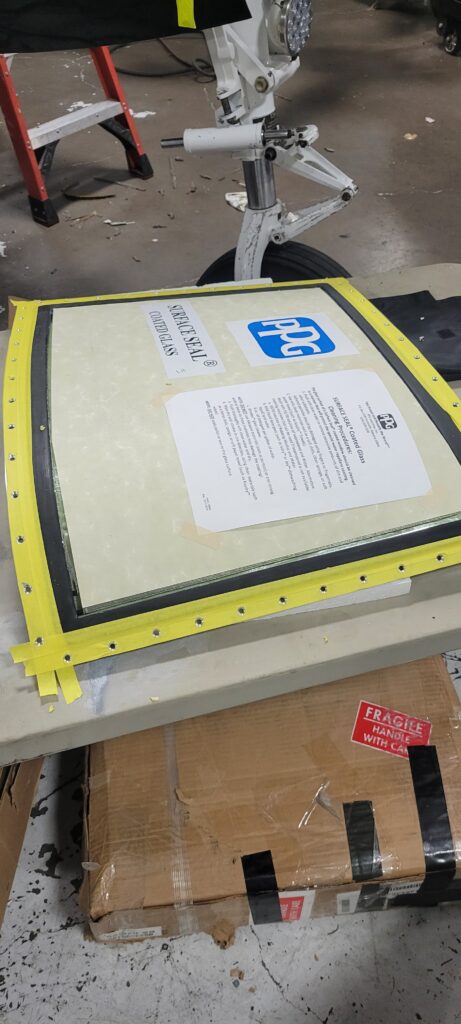
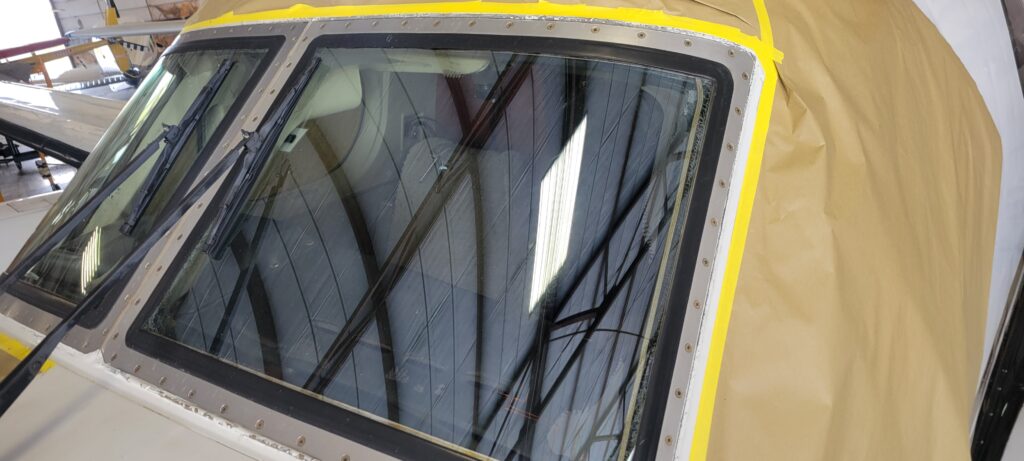
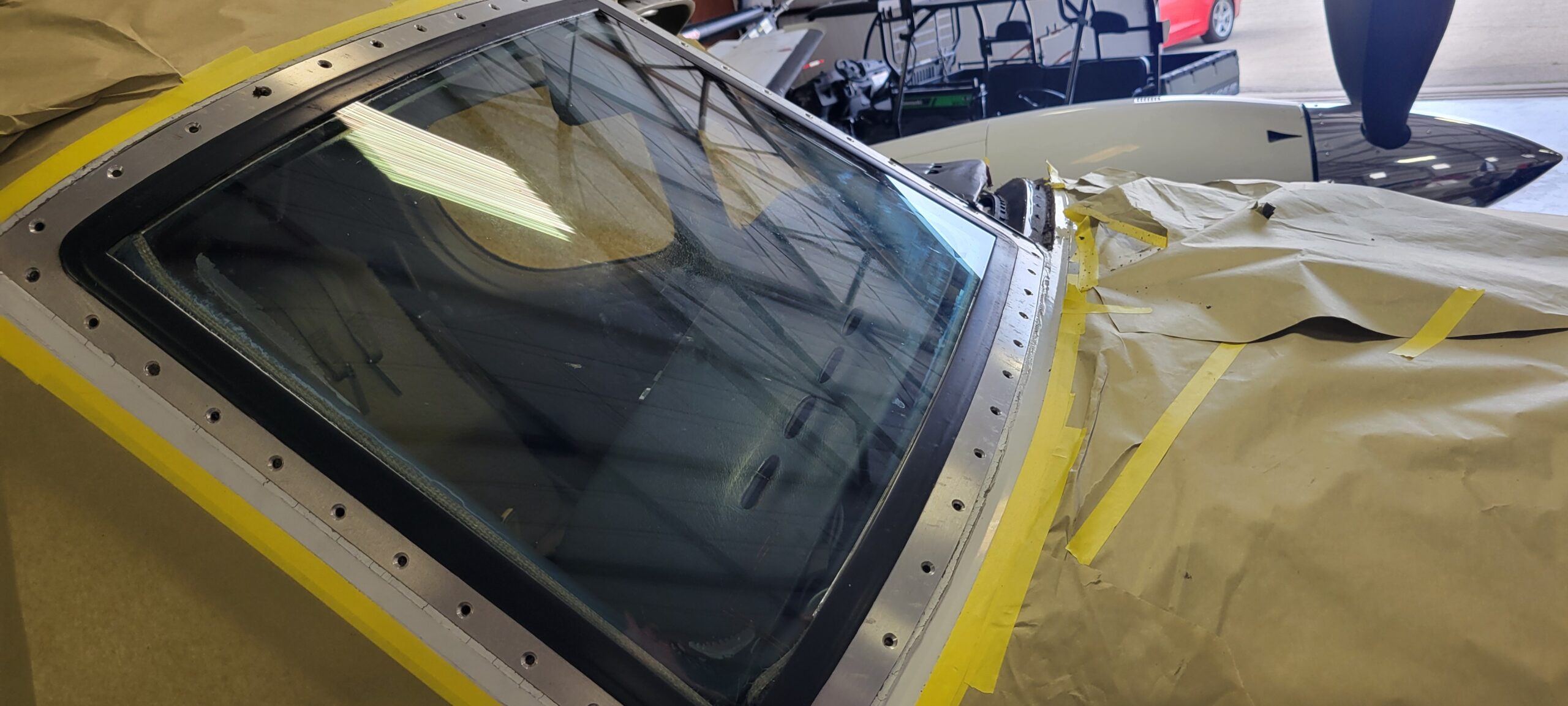
    King Air Windshield installations require delicate prep work to ensure a square and leak proof installation.
    The goal in every King Air Windshield install is to make it look like it is not even there when looking from the pilot and co-pilot seats.

    I’ve always believed that one of the most important parts of my job as an IA is helping owners make informed decisions. That doesn’t mean telling them what they should do. It means giving them the facts, explaining the regulations and manufacturer’s guidance, sharing what I’ve seen over the years, and making sure they understand both the risks and the options available. Every aircraft owner has different operational needs, budgets, and tolerance for downtime. Once they have the information they need, they can make the decision that’s right for their aircraft and the way they operate it.

    Because they rely on their King Air for business, they decided to order replacement windshields now instead of risking an extended AOG situation later.

    Final Thoughts

    Every owner’s situation is different. Some aircraft fly only a few hours each month, while others are essential business tools that simply can’t afford extended downtime.

    The important thing is understanding your options before a windshield becomes an AOG item.
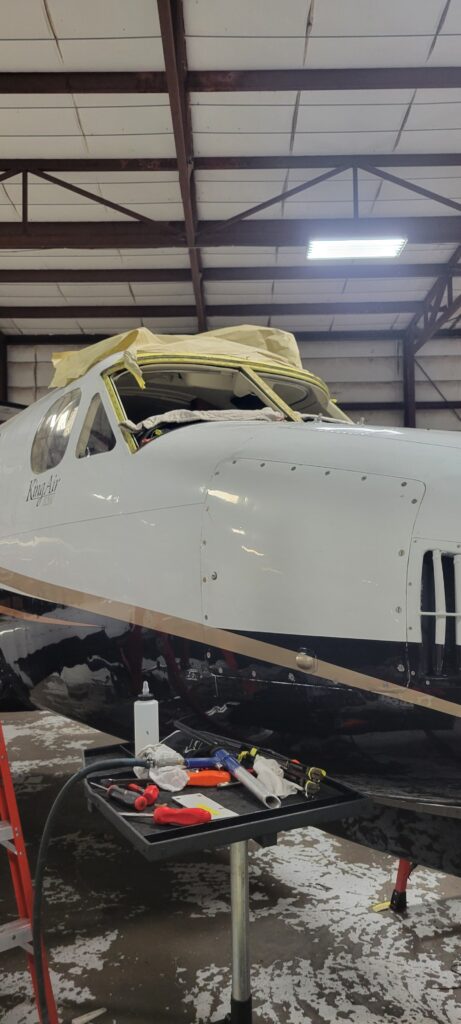
    King Air Windshield are durable and made to last a log time.  It is possible for the windshield can out last the install if the installation is not done correctly.
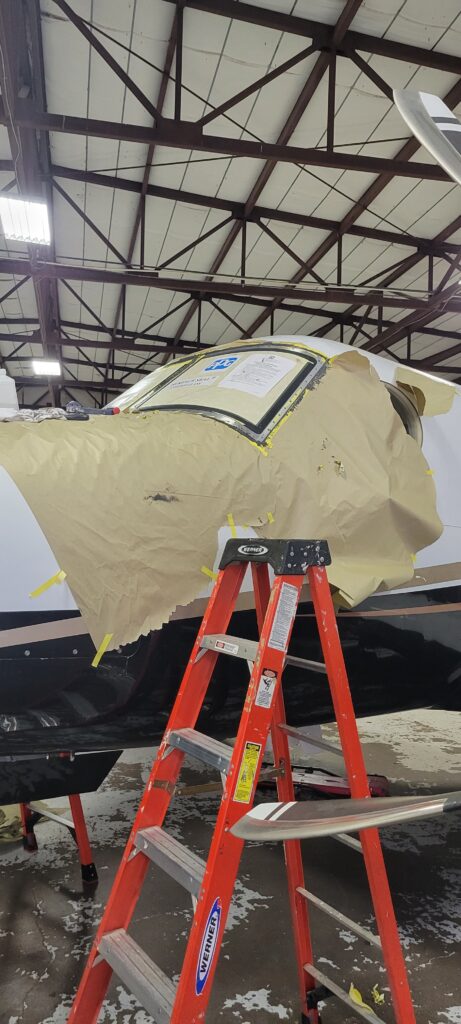
    This photo graph was the last picture that we took of the installation on this project. The final stages are being done on the King Air Windshield installation.

    In today’s market, the question isn’t simply, “Does my windshield need to be replaced?” It may also be, “If it needs replacement a year from now, will one even be available?”

    A little extra care during cleaning, paying attention to early signs of delamination, and planning ahead when necessary can go a long way toward keeping your aircraft flying.

    If your windshield is beginning to show signs of delamination, crazing, or other age-related deterioration, talk with your maintenance provider about developing a plan. With today’s lead times, planning ahead may keep your aircraft flying instead of sitting in a hangar waiting for replacement glass.

    If you have any questions about your King Air windshield, please don’t hesitate to give us a call or send us an email.

    We’re always happy to look at photos of your windshield and share our thoughts based on our experience.

    While nothing replaces an in-person inspection by the technician who has the aircraft in front of them, we’re always happy to provide a second opinion or simply help you better understand what you’re seeing.

    Sometimes another perspective can make the decision much easier.

    📧 admin@precisionaircraftservices.com

    📞 325-949-0643

    If this article helps even one King Air owner avoid an unexpected AOG situation, then it was worth taking the time to write.

    Scott’s Tip:

    One thing that surprised me when I first read these instructions years ago was that the manufacturer recommends starting with nothing more than clean water and your hand to remove bugs and debris. Many of us grew up reaching for brushes or bug scrubbers, but those can damage the protective coating over time. Sometimes the simplest method really is the best.

  • Understanding Aircraft Lubrication: Why the Right Grease Matters

    Understanding Aircraft Lubrication: Why the Right Grease Matters

    There have always been strong warnings about mixing different types of greases, especially in aviation. While these warnings apply to bearing greases and other lubricants used throughout an aircraft, none has drawn as much attention recently as the grease used in propellers.

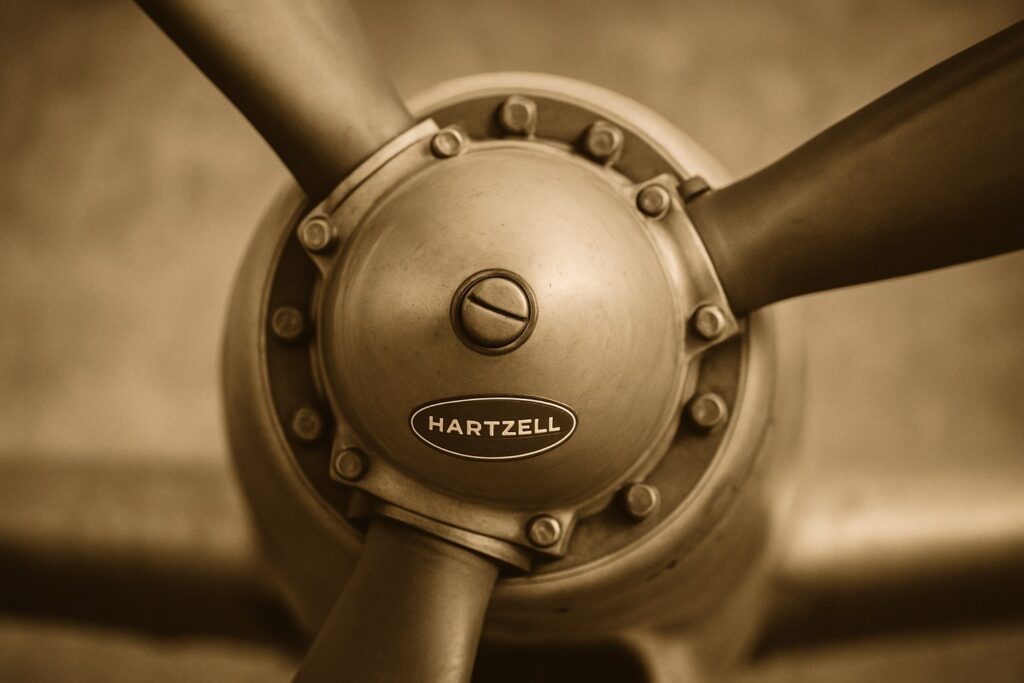
    Over the past few years, several propeller manufacturers have transitioned to NYCO GN3058 grease. I learned about NYCO grease a couple of years ago. But mixing NYCO GN3058 with traditional greases like Aeroshell 8 can lead to serious consequences. When these two greases are combined inside a propeller, the resulting mixture becomes overly fluid when the propeller is in motion. It thins to the point where it leaks past seals, creating a mess inside the spinner, along the cowling, and sometimes even forming a fine film on the windshield.

    I have run into the mixing of these two greases on a number of occasions and it was very noticeable. As mentioned it makes a mess, but more noticeable is when servicing the propeller with grease the grease that comes out of the hole from the removed zerk is a gray color. Not sure how it does it, but sitting, the grease looks like the structure of normal grease, but when the propeller starts to turn, it changes to a liquid from what the tech support guys say.

    This isn’t just a housekeeping issue—it’s a critical lubrication failure. The propeller is no longer properly lubricated, which can lead to mechanical damage. The only fix is to send the propeller to a certified prop shop for full disassembly and cleaning—a costly and time-consuming repair.

    NYCO GN3058 is quickly becoming the standard for many propeller manufacturers. We’ve seen several overhauled propellers return with a GN3058 placard affixed to the hub. These placards are typically black with yellow lettering—easy to spot if you’re paying attention. However, if someone unknowingly services the propeller with incompatible grease, cleanup is unavoidable. Some manufacturers offer service letters allowing temporary operation after contamination, but all recommend a full cleanout as soon as practical to protect the propeller.

    Always Use the Aircraft Maintenance Manual

    When lubricating any part of an aircraft, always refer to the Aircraft Maintenance Manual (AMM). It specifies not only the lubrication points but also the exact type of grease required at each location. Many modern manuals include detailed photos and charts. However, some still require cross-referencing between images and tables to determine the proper lubricant.

    Special Lubrication Procedures to Note

    Some manufacturers require specific chemicals or procedures beyond general greasing. For instance, Cessna recommends applying corrosion-resistant compounds to landing gear axles to protect them from moisture encountered during taxiing, takeoff, or landing on wet surfaces. Another example involves applying anti-seize to the entire nose axle of certain aircraft—not just the threads. The anti-seize compound contains corrosion inhibitors that outperform standard grease for long-term protection.

    Choosing a Grease Manufacturer

    While we don’t endorse any one brand, we’ve used Aeroshell products for decades due to their reliability and easy to obtain in our area.

    • Aeroshell 5: A versatile, general-purpose grease suitable for high-speed wheel bearings and engine accessories operating under high temperatures and RPMs. It is commonly used on magnetos and turbine starter/generators.
    • Mobilgrease 28: Preferred by many manufacturers for wheel bearings, especially where extreme temperature performance is required.
    • Aeroshell 6: Recommended for antifriction applications such as bearings and gear setup.
    • Aeroshell 7: Designed for general-purpose use—landing gear pivot points, flap actuator jackscrews, and some instrument applications.
    • Aeroshell 8: Historically used in propellers. However, with the rise of NYCO GN3058, it’s important to follow your propeller manufacturer’s exact recommendation and check the hub placard before servicing.

    Why NYCO GN3058 Is Gaining Ground

    One reason manufacturers are shifting to NYCO GN3058 is its excellent corrosion resistance. While Aeroshell 8 also contains corrosion inhibitors, NYCO emphasizes this feature heavily. That said, I’m not a chemist, so I can’t compare them definitively. What matters most is that you never mix greases unless the manufacturer specifically states they are compatible.

    MIL-SPEC: The Industry Standard for Grease

    Many maintenance manuals refer to lubricants by their MIL-SPEC (Military Specification) number. This is essentially the government’s “recipe” for how a lubricant must be formulated. Multiple manufacturers may produce grease that meets a specific MIL-SPEC, making it easier to match the required spec with available products.

    Practical Lubrication Tips for Aircraft Owners and Pilots

    • Grease breaks down over time, especially in high-heat, high-vibration environments. If practical, remove old grease during maintenance, especially from bearings. This not only ensures fresh lubrication but also allows you to visually inspect for wear or damage.
    • Ensure surfaces are dry before applying new grease. Residual solvent from cleaning agents can break down grease prematurely.
    • Verify all grease fittings (zerks) accept grease. Clogged zerks prevent proper lubrication and can cause component failure.
    • If a zerk fitting appears blocked or damaged, replace it rather than attempt cleaning. With labor rates where they are today, replacing a zerk—usually under $2—is far more economical than a mechanic spending time trying to clear it.

    Final Thoughts

    Aircraft lubrication is more than routine maintenance—it’s a critical aspect of airworthiness and safety. As grease technology changes and manufacturers adopt new standards, pilots and owners must stay informed. The cost of using the wrong grease—or mixing incompatible ones—is often much higher than people expect.

    If you’re unsure what type of grease is approved for a component, don’t guess. Consult the AMM or reach out to your trusted maintenance provider. At Angelo Precision Aircraft, we’re happy to help answer questions and ensure you’re using the right product for your aircraft.

    If you need help finding you lubrication needs for your aircraft call Angelo Precision Aircraft at 325-949-0643 or email shinds@shindsprecisionaircraftservices.com and we will be more than happy to help you look it up and get you the information that you require.

  • Why a Pre-Purchase Inspection Should Be an Annual Inspection

    Why a Pre-Purchase Inspection Should Be an Annual Inspection

    Thinking of buying an aircraft? One of the most critical steps in the process is the pre-purchase inspection. Unfortunately, many buyers call us without knowing what that actually entails—or how thorough it should be.

    In this post, we’ll explain why an annual inspection is the best approach for a pre-purchase aircraft inspection, share real examples of what we’ve found, and offer advice to help you avoid costly mistakes.


    What Is a Pre-Purchase Aircraft Inspection?

    A pre-purchase inspection is designed to uncover any issues that could affect the airworthiness, value, or safety of an aircraft before a sale is finalized. Over the years, we’ve seen that buyers often have different expectations. Some think a simple compression test or oil filter check is enough—others want something close to a full annual inspection.

    Our experience has taught us this:
    ➡️ Anything less than an annual inspection is not enough.


    Real Examples: What We’ve Found During Pre-Purchase Inspections

    1. Cessna 210 – Cracked Landing Gear Actuator Box

    In one inspection, we found a crack in a Cessna 210’s landing gear actuator box—a serious issue that made the aircraft unairworthy. The seller appeared unaware and surprised, but the fact remains: this should have been discovered in a previous inspection.

    Even if it wouldn’t have caused an immediate failure, it still needed to be repaired to comply with FAA regulations.

    2. Twin-Engine Cessna – Undocumented Fuselage Repairs

    Another aircraft showed signs of a fuselage repair with non-factory rivets, and no logbook entry documenting the work. Most of the rivets didn’t meet FAA standards. The buyer was frustrated that we uncovered the issue—despite the fact that it likely saved them thousands in repairs, and possibly much more in safety risk.

    3. Cessna 182 – Missed Corrosion by Seller’s Mechanic

    One buyer hired a separate shop to perform a thorough pre-buy inspection on a Cessna 182, negotiated repairs with the seller, and closed the deal. Everything seemed great—until they brought the aircraft to us for its first annual.

    We found serious corrosion under the floor. The belly rivets were loose, and the corrosion was likely from frequent beach landings by the previous owner—something that was not disclosed. The mechanic who did the pre-buy was the seller’s regular technician.

    Had the buyer hired an independent A&P/IA, the issue might have been caught earlier.


    Why We Recommend an Annual Inspection for Pre-Purchase

    A full annual inspection is the most comprehensive, legally recognized, and standardized way to assess an aircraft. Here’s why:

    ✅ Thorough Mechanical Evaluation

    • Covers all systems, structures, and airworthiness-critical components.
    • Identifies corrosion, wear, undocumented repairs, and more.

    ✅ Full Paperwork Review

    • Verifies Airworthiness Directives (ADs) compliance.
    • Reviews Service Bulletins (SBs), Service Letters (SLs), FAA Form 337s, and logbook history.
    • Helps uncover missing, incomplete, or inaccurate records.

    Some say the value of the logbooks can be as much as 50% of the aircraft’s resale value—especially for high-end models. Maintaining clean and complete documentation is critical for resale and regulatory compliance.


    Don’t Use the Seller’s Mechanic

    Using the seller’s mechanic may seem convenient, but it can be a serious conflict of interest. Always hire a neutral, independent mechanic or shop to protect your investment.

    Whether you’re spending $50,000 or $5 million, it’s a major investment—and should be treated like one.

    Even if you are looking at an aircraft being offered by one of our customers that we have maintained, we will be the first to advise you to get someone other than us to do your pre-purchase inspection. If you do decide to continue with us, we will assign a different inspector than the one who did the last inspection, and offer a non-bias look at the aircraft.


    Final Thoughts: Protect Your Investment with the Right Inspection

    We’ve seen both sides: the buyers who’ve walked away from bad deals because of what we found, and the ones who’ve gone forward with confidence knowing the aircraft was solid.

    We never tell customers to buy or not buy—we simply perform a detailed annual inspection and give you the facts.


    Summary: Our Pre-Purchase Inspection Recommendations

    • Always opt for an annual inspection for any aircraft purchase.
    • Hire an independent mechanic or inspection facility.
    • Review logbooks and maintenance history thoroughly.
    • Get everything documented before closing the deal.

    With the right inspection, you can avoid expensive surprises and fly with peace of mind.


    Need help with a pre-purchase inspection or have questions about buying an aircraft?
    Contact us today and let our experienced team help you make the most informed decision possible.

    shinds@shindsprecisionaircraftservices-com

    325-949-0643