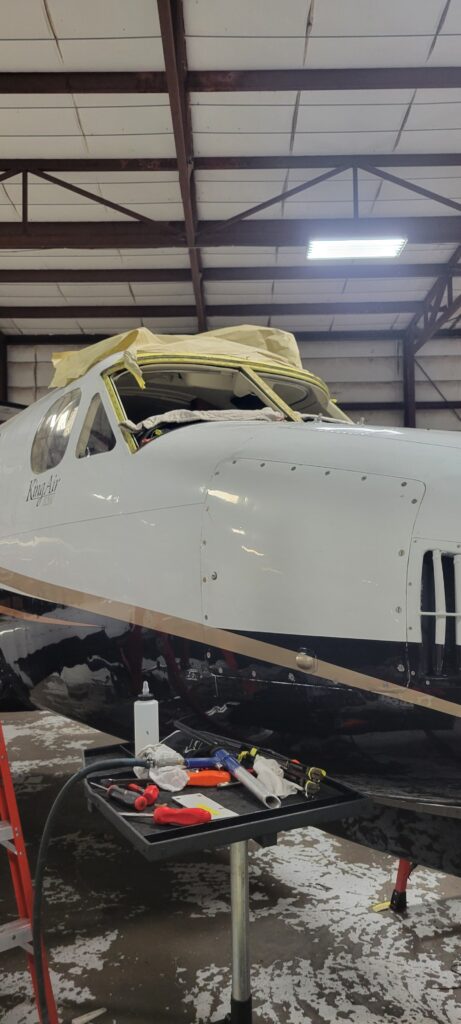
While going through some old photos, I came across several from a King Air windshield replacement we completed and thought they were worth sharing.
Most King Air owners already know that replacing a windshield has never been inexpensive. Unfortunately, today’s supply chain has made the situation much worse.
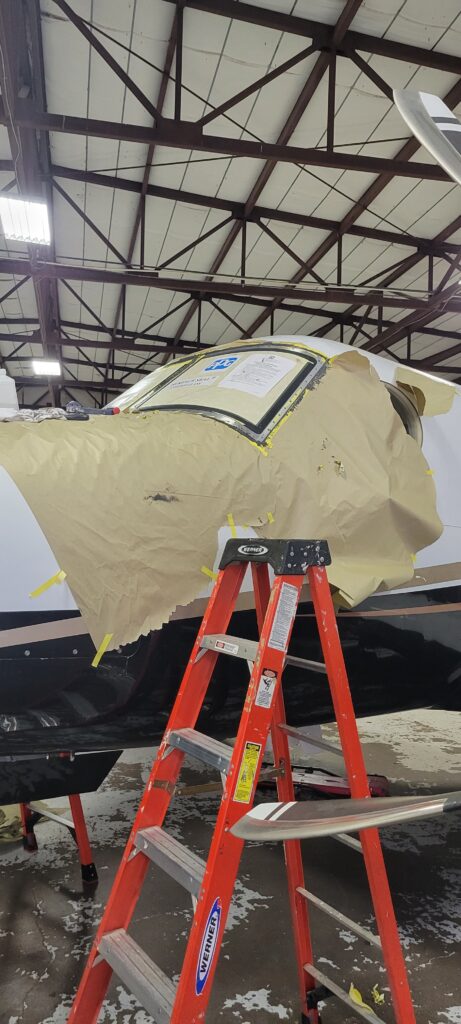
We recently ordered a set of replacement windshields for one of our customers. When I asked the manufacturer for an estimated delivery time, they honestly couldn’t give me one. I even asked if we were looking at more than a year, and their response was essentially, “Probably… but we can’t promise that because some are taking even longer.”
That should get every King Air owner’s attention.
Across the country there are aircraft sitting in hangars with plywood or temporary covers where their windshields once were, waiting on replacement glass. What used to be a scheduled maintenance event can now turn into an extended Aircraft on Ground (AOG) situation.
During my search for available windshields, I did locate one source that reportedly had them available immediately. The asking price was approximately $60,000 per windshield.
For comparison, purchasing through the normal supply chain is currently just under $20,000 per side, although those orders may now involve lead times exceeding a year. That $60,000 price isn’t representative of the normal market—it simply reflects the premium someone is willing to pay when immediate availability is the only option.
Because of this, taking care of the windshields, you already have has never been more important.
One of the photos I’m including is the manufacturer-provided care sheet that came with a windshield we recently installed. These are the cleaning recommendations supplied by the manufacturer.
PPG Surface Seal® Coated Windshield Cleaning Recommendations
Before Cleaning
- Rinse the windshield thoroughly with clean water to remove loose dirt and debris.
- If bugs or other material remain stuck to the windshield, gently remove them using only your fingers or fingernails. Avoid using scrapers or abrasive tools.
Use Only Clean, Soft Materials Such As
- Soft microfiber cloths
- Clean sponges
- Soft paper towels
Recommended Cleaning Solutions
- 50/50 mixture of isopropyl alcohol and water
- 50/50 mixture of rubbing alcohol and water
- Mild liquid dishwashing detergent (approximately ¼ ounce per gallon of water)
- Windex® Glass Cleaner
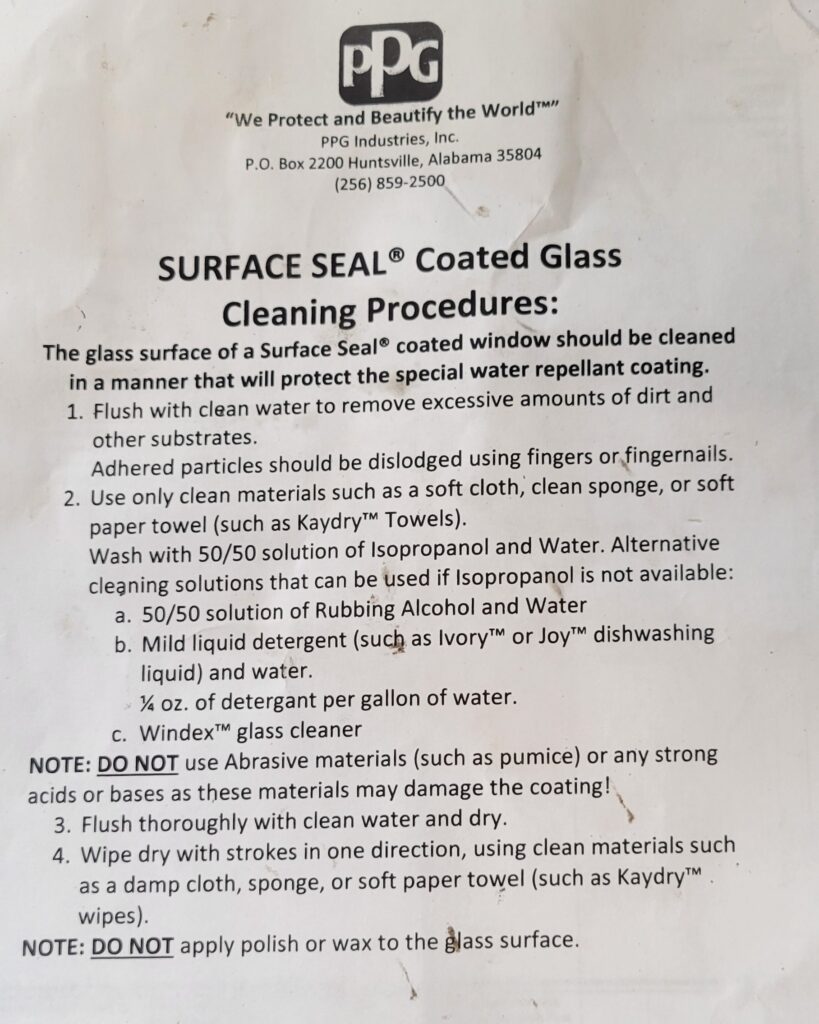
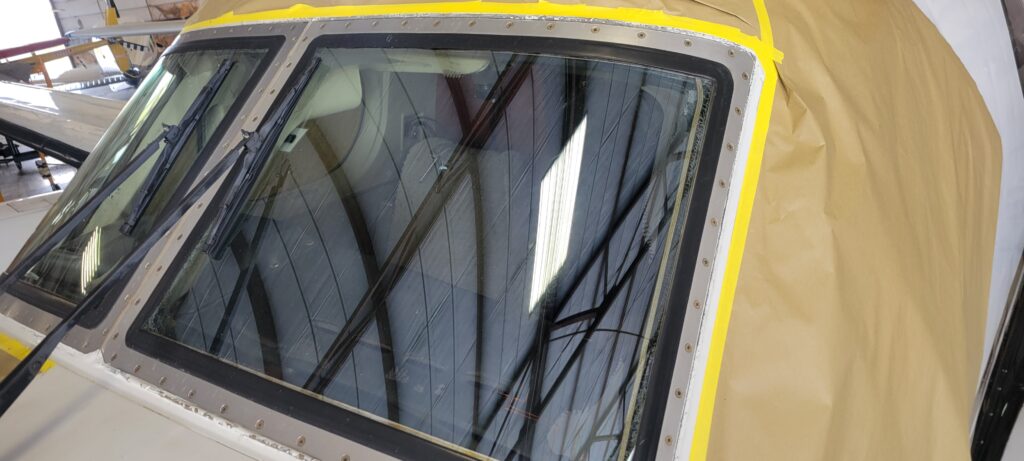
After Cleaning
- Rinse thoroughly with clean water.
- Dry using clean materials while wiping in one direction.
Avoid the Following
❌ Abrasive materials or cleaners (including pumice)
❌ Strong acids or strong alkaline cleaners
❌ Polishes or waxes applied to the glass
These products can damage the windshield’s special water-repellent coating.
Many manufacturers have also moved away from recommending brushes or aggressive cleaning methods. Their first recommendation is often to start with nothing more than clean water and your hand to safely remove contaminants before using any cleaning solution.
Planning Ahead May Be More Important Than Ever
One additional point I would encourage owners to consider is planning ahead if your inspector begins documenting delamination or other windshield defects.
If your inspector tells you that the windshield is still within the allowable limits and recommends continued monitoring, you may also want to consider today’s supply chain when deciding what to do next.
While the windshield may be completely airworthy today, if it reaches replacement limits a year from now, you may still be waiting another year for new glass.
I recently went through this exact situation with one of our customers.
During a Phase Inspection, I found delamination that was well within the limits allowed by the Aircraft Maintenance Manual. Under normal circumstances, I would have simply documented the condition and recommended continued monitoring, just as the maintenance manual suggests.
However, today’s supply chain isn’t normal.
I explained to the customer that while the windshield remained airworthy, we should also consider the current replacement lead times. I recommended inspecting the affected area about once a month and documenting its progression. Tracking the rate of growth would allow us to make a more informed decision before the windshield became an AOG item.
Could the delamination remain within limits for years? Absolutely.
Could it progress much faster? Yes.
In my experience, once delamination begins, it rarely stops—it simply progresses at different rates depending on the windshield.
I also shared another factor many owners may not realize: pricing.
Only three years ago we were purchasing these windshields for under $10,000 per side. Today, they are approaching $20,000 per side through the normal supply chain, and immediate availability can command significantly higher prices.
Rather than telling the customer what they should do, I simply gave them all the information available—the current condition of their windshield, the manufacturer’s limits, today’s lead times, current pricing, and what I have seen over the years—so they could make an informed decision based on how they use their aircraft.
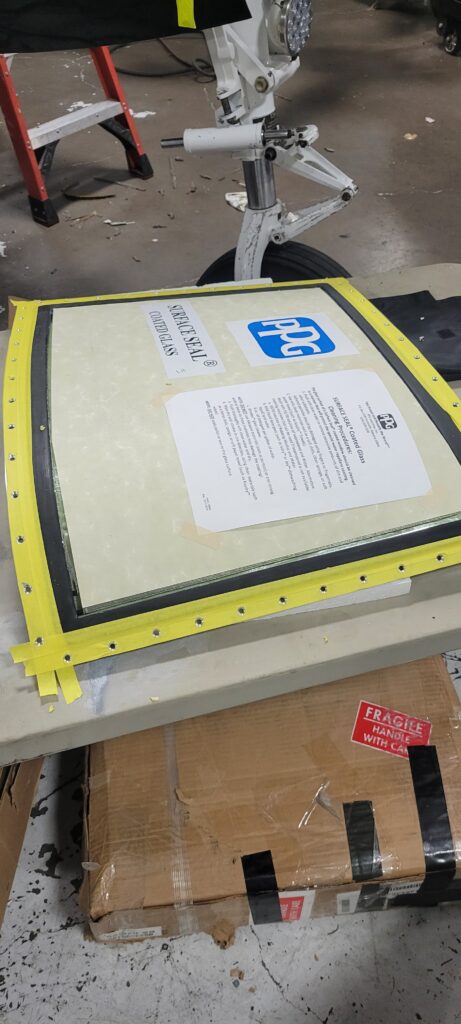
I’ve always believed that one of the most important parts of my job as an IA is helping owners make informed decisions. That doesn’t mean telling them what they should do. It means giving them the facts, explaining the regulations and manufacturer’s guidance, sharing what I’ve seen over the years, and making sure they understand both the risks and the options available. Every aircraft owner has different operational needs, budgets, and tolerance for downtime. Once they have the information they need, they can make the decision that’s right for their aircraft and the way they operate it.
Because they rely on their King Air for business, they decided to order replacement windshields now instead of risking an extended AOG situation later.
Final Thoughts
Every owner’s situation is different. Some aircraft fly only a few hours each month, while others are essential business tools that simply can’t afford extended downtime.
The important thing is understanding your options before a windshield becomes an AOG item.
In today’s market, the question isn’t simply, “Does my windshield need to be replaced?” It may also be, “If it needs replacement a year from now, will one even be available?”
A little extra care during cleaning, paying attention to early signs of delamination, and planning ahead when necessary can go a long way toward keeping your aircraft flying.
If your windshield is beginning to show signs of delamination, crazing, or other age-related deterioration, talk with your maintenance provider about developing a plan. With today’s lead times, planning ahead may keep your aircraft flying instead of sitting in a hangar waiting for replacement glass.
If you have any questions about your King Air windshield, please don’t hesitate to give us a call or send us an email.
We’re always happy to look at photos of your windshield and share our thoughts based on our experience.
While nothing replaces an in-person inspection by the technician who has the aircraft in front of them, we’re always happy to provide a second opinion or simply help you better understand what you’re seeing.
Sometimes another perspective can make the decision much easier.
 admin@precisionaircraftservices.com
 325-949-0643
If this article helps even one King Air owner avoid an unexpected AOG situation, then it was worth taking the time to write.
Scott’s Tip:
One thing that surprised me when I first read these instructions years ago was that the manufacturer recommends starting with nothing more than clean water and your hand to remove bugs and debris. Many of us grew up reaching for brushes or bug scrubbers, but those can damage the protective coating over time. Sometimes the simplest method really is the best.