Posts in Helicopter Maintenance

Category: Helicopter Maintenance

  • Why Aircraft Inspection Labor Should Be Consistent — And How We Keep It That Way

    Why Aircraft Inspection Labor Should Be Consistent — And How We Keep It That Way

    Many aircraft technicians will tell you they love what they do—but would love it even more if there were less paperwork involved. At Angelo Precision Aircraft, we have made it a priority to reduce time spent on tasks that do not directly contribute to working on the aircraft itself.

    At the core of our philosophy is a simple principle: perform the necessary work with efficiency, consistency, and purpose.

    Consistency in Aircraft Inspections

    One of the biggest frustrations aircraft owners experience is inconsistency in inspection labor hours. The same aircraft, inspected year after year, can produce significantly different labor charges depending on the shop.

    From our perspective, that simply does not make sense.

    An aircraft does not gain or lose inspection panels from one year to the next. The number of access points, lubrication points, and standard inspection items remains the same. Tasks such as opening and closing the aircraft, cleaning and inspecting components, lubricating systems, and performing standard tests are fundamentally consistent.

    Because of this, we believe inspections should be based on a predictable, standardized labor structure—not wide variations from year to year.

    Where Time Gets Lost

    In modern aircraft maintenance, the largest time variable is no longer the physical inspection itself. More often, it is the research and documentation behind it.

    Inspectors are responsible for reviewing and documenting items such as:

    • Airworthiness Directives (ADs)
    • Service Bulletins (SBs)
    • Life-limited components
    • Continued Airworthiness inspections
    • Recurring inspection requirements

    Each aircraft has its own compliance history, and without an efficient system, this research can consume hours.

    We have also found that newer technicians sometimes unintentionally mix inspection time with discrepancy correction time. That creates inaccurate labor tracking and can make inspection hours appear higher than they should be.

    At our shop, we train our team to clearly separate:

    • Inspection work — opening, inspecting, lubricating, and closing
    • Discrepancy correction — repairs resulting from findings during the inspection

    That distinction helps us maintain consistency and helps the customer better understand where time is being spent.

    Efficiency Through Tools and Process

    Efficiency is not just about philosophy—it is also about execution.

    Using the proper tools makes a measurable difference. Modern ratcheting drivers and controlled low-torque power tools can significantly reduce time when opening and closing aircraft panels while also reducing the risk of damage compared to improper tool use.

    Of course, tools alone are not enough. Process matters just as much.

    The Hidden Risk: AD Compliance Documentation

    Through discussions with multiple FAA FSDO offices, one issue consistently stands out: improperly completed AD reports.

    A common mistake is signing only at the bottom of an AD report rather than signing each individual line item when required.

    The issue is that many reports require:

    • A technician signature
    • Certificate information
    • The date of compliance
    • The method of compliance for each item

    A general signature at the end of the report may not satisfy the documentation expectation for each AD entry. When that happens, owners of older aircraft can end up paying the price later if previous documentation cannot be accepted as adequate proof of compliance.

    This is not just a paperwork issue—it can directly affect customer cost and future maintenance planning.

    Our Solution: A System Built for Accuracy and Efficiency

    To address these challenges, we have invested in software and internal processes designed to streamline compliance while maintaining accuracy.

    During an aircraft’s first visit to our shop, we:

    • Document major components such as the airframe, engine, propeller, and appliances
    • Record model and serial number information
    • Research applicable Airworthiness Directives, Service Bulletins, life-limited items, and Continued Airworthiness requirements
    • Establish a compliance baseline for future visits

    Once that work is completed, our system helps us track recurring requirements, identify upcoming items, and maintain more consistent records from one inspection cycle to the next.

    Customer Visibility and Planning

    Our customer portal extends these benefits even further.

    Through the portal, customers can:

    • View upcoming maintenance items
    • Monitor projected due items based on aircraft time
    • Plan future downtime and budgeting
    • Enter discrepancies for our team to review
    • Communicate directly with our office about future work

    This gives aircraft owners greater visibility into their maintenance planning and allows them to make better-informed operational and financial decisions.

    The Bottom Line

    Aircraft maintenance will always require a balance between hands-on work and documentation. However, with the right systems, training, and discipline, unnecessary labor hours can be reduced significantly.

    At Angelo Precision Aircraft, our goal is simple:

    • Perform inspections efficiently
    • Maintain accurate compliance records
    • Provide consistent, predictable labor
    • Deliver real value to our customers

    Because in the end, our responsibility is not just to maintain aircraft—it is to do so with integrity, precision, and respect for the customer’s investment.

  • Precision Aircraft Services Recognized as Longest-Serving Robinson Helicopter Service Center at Verticon 2026

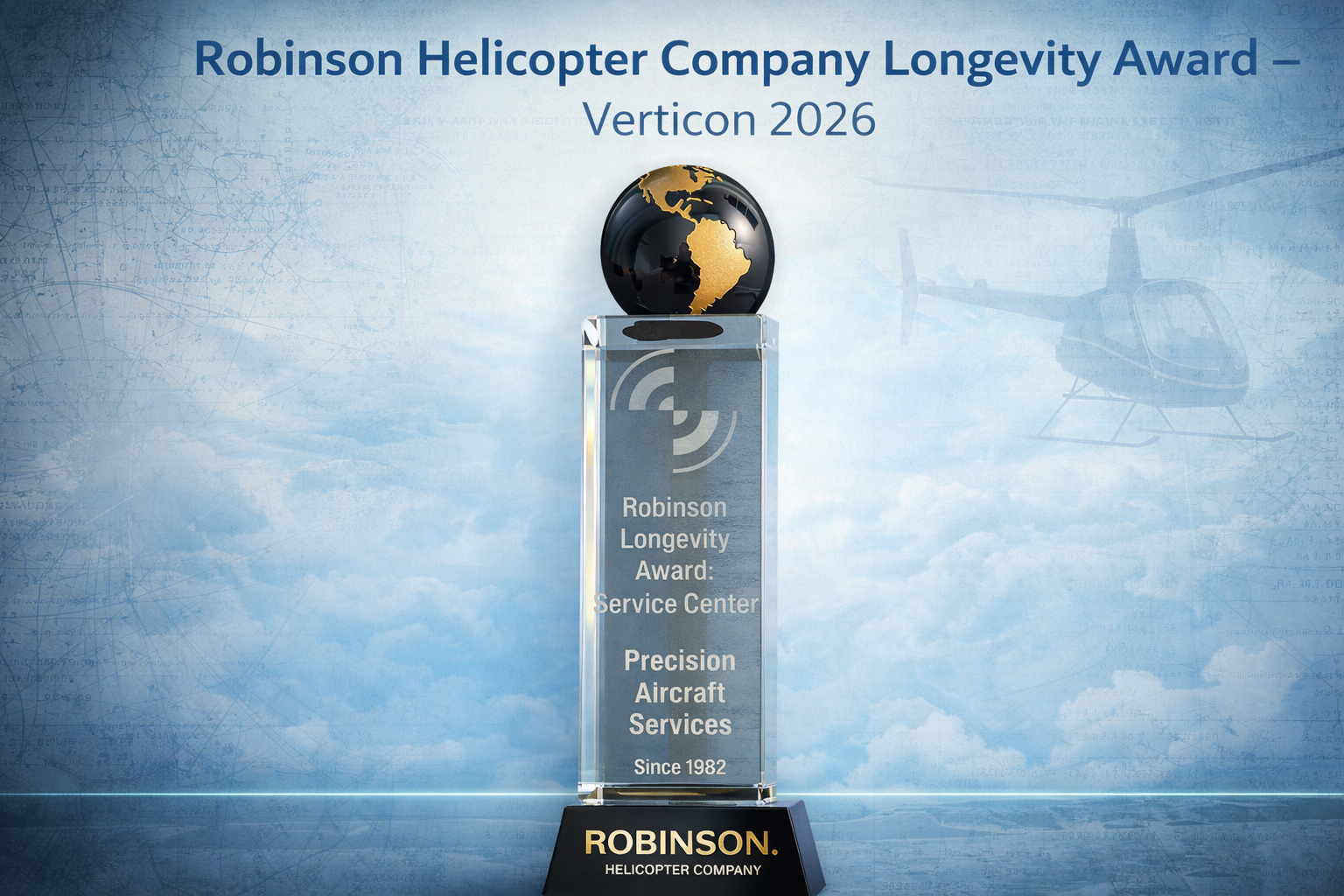
    Precision Aircraft Services Recognized as Longest-Serving Robinson Helicopter Service Center at Verticon 2026

    At the Verticon 2026 convention, Precision Aircraft Services and Frank Hinds were honored by Robinson Helicopter Company with the Longevity Award, recognizing our organization as the longest-serving Robinson Helicopter Service Center.

    The recognition was meaningful not simply because of the number of years involved, but because of what it represents.

    During the presentation, Robinson Helicopter Company emphasized something that many people in aviation already understand well: manufacturers cannot support the fleet alone. Aircraft operate all over the world, and the long-term reliability of those aircraft depends on the network of experienced service centers that maintain, inspect, and support them every day.

    Robinson noted that their success over the years has depended heavily on that network of dedicated service centers. These are the technicians and companies that interact directly with owners and operators, help troubleshoot issues in the field, and ensure that aircraft continue operating safely and reliably.

    Precision Aircraft Services has been part of that network since 1982.

    Robinson also recognized the family nature of our company. Precision Aircraft Services has always been a family business, operated by Frank Hinds along with his wife Chris and their son Scott. Like many aviation maintenance businesses across the country, the company has grown through long hours, dedication to customers, a deep respect for the aircraft we work on, and the enjoyment of being part of the aviation community.

    In the early years, Frank occasionally spoke with Robinson Helicopter Company founder Frank Robinson. From time to time they discussed maintenance considerations or ideas from technicians working on the helicopters in the field. When those ideas made sense, they sometimes resulted in small improvements that made the aircraft easier to maintain. Some of those changes can still be seen on the R22 today.

    Robinson Helicopter Company was always willing to listen to feedback from its service center network. Service centers are where many owners interact with the company through routine maintenance and inspections, so feedback from the field often provided valuable insight. Over the years, various ideas were tested. Some worked well, while others did not, but Robinson’s willingness to respond quickly and adjust policies when needed showed how closely the company worked with its support network.

    That willingness to listen to the people who work on the aircraft every day has always been one of the strengths of Robinson Helicopter Company.

    Receiving the Longevity Award at Verticon was a special moment for our company, but it also served as a reminder of something larger. Aircraft manufacturers, service centers, and operators all rely on one another. The continued success of any aircraft fleet depends on that cooperation.

    Looking back, we have been proud to be associated with Robinson Helicopter Company over the years. While the relationship has certainly helped bring customers to our door, the greater value has been the people we have come to know along the way.

    We have had the opportunity to work with many great people at Robinson such as Frank, Kurt, Butch, Pat, Daniel, Sandra, Ann, Efron, and Enrique, to name a few. Through that connection we have also had the pleasure of meeting many Robinson owners, many of whom have become long-time customers and close friends. In addition, we have built relationships with other Robinson dealerships and service centers across the network, and it has always been a pleasure working together when the need arises.

    Precision Aircraft Services is proud to have been part of the Robinson support network for many years, and we remain committed to continuing that work for many years to come.

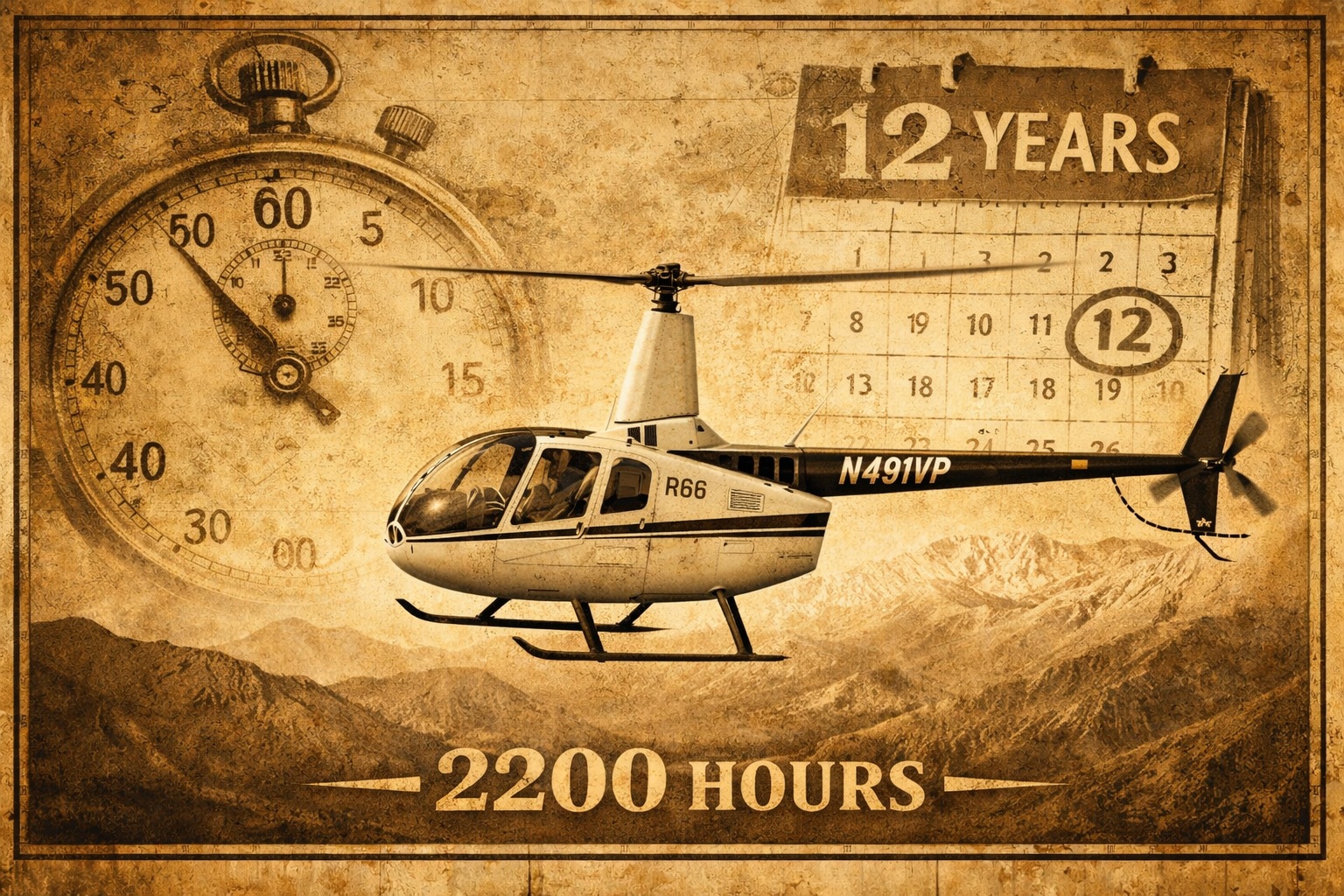
  • Are Robinson Helicopter 12-Year and 2,200-Hour Overhauls Legally Required?

    Are Robinson Helicopter 12-Year and 2,200-Hour Overhauls Legally Required?

    For this blog post, I will be discussing the question of whether the Robinson Helicopter 12-year inspection or the 2,200-hour inspection is required. Over the years we have been asked about these many times. It is a topic that some consider controversial, and it can be surprisingly difficult to find a clear answer on the internet.

    R44 Inspection
    Correct Inspections at proper intervals save lives and should not be taken lightly.

    I want to stress right off the bat – we strongly encourage following the guidelines in the maintenance manuals of the Robinson Helicopters. People smarter than us have developed their guidelines for a reason and for that reason alone we believe that it is wise to do the inspections that they outline. While it might be legal, it is highly recommended by us that all Robinson Helicopter Models be maintained within the guidance of the Manufacture. We strongly advise this to our customers when they ask, and this is what we tell people who call and ask. When asked we do outline the regulations since they are the regulations. This is an honest debate that has gone on for years and still of the most common questions Robinson helicopter owners ask is: “Is the 12-year inspection or the 2,200-hour overhaul legally required?”

    First, I would like to state that we are not legal experts, and it is always best to discuss questions like this with your own maintenance team, legal advisor, and insurance agent. Decisions regarding maintenance at this level can have significant financial consequences, sometimes reaching hundreds of thousands of dollars, if not carefully considered.

    In this article I will explain how we interpret the regulations and how we advise our customers. With that information, you can better understand the issue and make an informed decision.

    A good place to start is how the helicopter operates.

    In U.S. aviation regulations, Part 91 and Part 135 refer to two different types of aircraft operations with different levels of regulatory oversight.

    Part 91 governs most private, non-commercial flying, such as personal aircraft owners operating their own airplanes or helicopters. Under Part 91, the primary maintenance requirements are compliance with Airworthiness Directives (ADs), the Airworthiness Limitations section of the aircraft’s maintenance manuals, and completion of required inspections such as the annual inspection. Manufacturer-recommended overhaul intervals are generally considered guidance unless they appear in the Airworthiness Limitations section.

    Part 135, on the other hand, governs commercial operations conducted for hire, such as charter or air taxi services. Because passengers or cargo are carried for compensation, the regulations require a much higher level of oversight. Aircraft operating under Part 135 must be maintained in accordance with an FAA-approved maintenance program or the manufacturer’s recommended maintenance program, which often makes manufacturer inspection intervals and overhaul schedules mandatory.

    As a result, maintenance requirements, inspection frequency, documentation, and operational oversight are significantly more stringent under Part 135 than under Part 91.

    When reviewing the Robinson Maintenance Manuals, you will find an important section that helps clarify how the regulations apply. In the R22 and R44 Maintenance Manuals this appears in Chapter 3 – Life-Limited Components, and in the R66 Maintenance Manual it appears in Chapter 4.

    Within those sections you will find a statement like the following:

    “FAA-approved pages XXXXX constitute the Airworthiness Limitations Section in its entirety, are considered segregated from the rest of the document, and set forth the FAA-approved mandatory replacement times for fatigue life-limited parts.”

    This statement is important because it establishes that the components listed in that section have FAA-approved life limits. Those limits are not simply recommendations. They are mandatory replacement times, and operating an aircraft beyond those limits would make the aircraft unairworthy and illegal to operate.

    However, it is equally important to understand that this requirement applies only to the components listed in the Airworthiness Limitations section.

    When reviewing the inspection sections of the maintenance manual, you will notice something different. Those sections generally contain manufacturer inspection procedures and recommendations, but they do not carry the same FAA approval language that appears in the Airworthiness Limitations section.

    Recently we encountered a helicopter that illustrates this distinction well. The aircraft had more than 2,200 hours total time, yet there was no logbook entry identifying a “2,200-hour inspection.” At first glance this raised questions.

    However, upon reviewing the records further, it was clear that all the life-limited components that reached their 2,200-hour limits had been replaced approximately 1,100 hours earlier. In other words, the helicopter was beyond 2,200 hours total time, but the components themselves were well within their approved service life limits.

    Situations like this are where much of the confusion comes from.

    Many people refer to the Robinson overhaul as the “2,200-hour inspection”, but the regulatory requirement is tied to the life-limited components, not the inspection label itself.

    The overhaul procedure described by the manufacturer is generally the most practical way to access and replace those components, which is why it has become widely associated with the 2,200-hour mark. But the underlying regulatory requirement still centers on component life limits contained in the Airworthiness Limitations section.

    This distinction is one reason why owners sometimes encounter differing opinions within the aviation community.

    Beyond the regulatory considerations, there are other practical factors owners should consider. Insurance policies, resale value, financing requirements, and manufacturer guidance can all influence maintenance decisions. In many cases these factors lead owners to perform the recommended overhaul even when the regulatory requirement may be interpreted differently.

    For that reason, we always encourage helicopter owners to work closely with experienced maintenance professionals when evaluating these decisions.

    Robinson helicopters have proven to be some of the most reliable and widely used helicopters in the world, and proper maintenance plays a major role in maintaining that reputation. Whether an aircraft is used for personal flying, training, or commercial operations, understanding how the regulations apply helps owners make informed decisions about the care and operation of their aircraft.

    While the regulatory discussion is important, it is equally important to understand that manufacturer recommendations exist for a reason. At Angelo Precision Aircraft, we strongly believe that the guidance provided by the manufacturer is based on extensive engineering, operational experience, and safety considerations. For that reason, we believe those recommendations should always be carefully considered when planning maintenance. Every aircraft operates in a unique environment, and each situation should be evaluated individually. For example, a helicopter operating near saltwater or in a humid coastal environment may experience corrosion far more aggressively than an aircraft operating in the dry climate of West Texas. In those cases, inspections such as the 12-year or 2,200-hour inspections may be even more important, regardless of regulatory interpretation, because they allow technicians to thoroughly examine areas of the aircraft that may not normally be visible during routine inspections. Factors such as operating environment, utilization, aircraft history, and long-term ownership goals should all be considered when making these decisions.

    At Angelo Precision Aircraft, our goal is always to help aircraft owners understand their options and maintain their aircraft safely and responsibly.

    If you have questions about Robinson helicopter maintenance or overhaul planning, feel free to contact the team at Angelo Precision Aircraft. We are always happy to discuss maintenance options with owners and operators.

    Quick Summary

    Because this topic can be confusing, here is a simplified summary of how many maintenance professionals interpret the regulations:

    • Airworthiness Limitations listed in the Robinson maintenance manual are FAA-approved and mandatory. Life-limited components must be replaced within their approved service limits.

    • The 2,200-hour overhaul is commonly used as the practical method for replacing many of these life-limited components, which is why it is often associated with that time interval.

    • The 12-year inspection is a manufacturer recommendation intended to allow deeper inspection of the aircraft and replacement of certain components that may deteriorate with time.

    • For Part 135 commercial operations, aircraft must follow an FAA-approved maintenance program or the manufacturer’s recommended program, which generally makes the overhaul schedule mandatory.

    • For Part 91 private operations, regulatory requirements are primarily tied to Airworthiness Limitations, Airworthiness Directives, and required inspections such as the annual inspection.

    • Even when a regulation may not require an inspection interval, environment, aircraft condition, insurance requirements, and resale value should all be considered when making maintenance decisions.